Medinet Habu: The Mortuary Temple of Ramesses III
Book an experience
Guided historical tours
Walk through history with a local expert. Tours include skip-the-line access where available.
On the West Bank of Luxor, beyond the Valley of the Kings and Hatshepsut’s temple, sits Medinet Habu - the mortuary temple of Ramesses III, built between approximately 1184 and 1153 BC. It is the second-largest temple complex in Egypt after Karnak, one of the best-preserved mortuary temples in the country, and one of the most regularly bypassed by tour groups who have run out of time after the tombs.
Scale and Layout
The outer enclosure wall of Medinet Habu is intact - a rare situation for a monument of this age - and walking inside it gives a genuine impression of a complete religious complex. The mud-brick storehouses and support structures within the enclosure are still largely standing. The main temple occupies the centre of the complex and is entered through the first pylon.
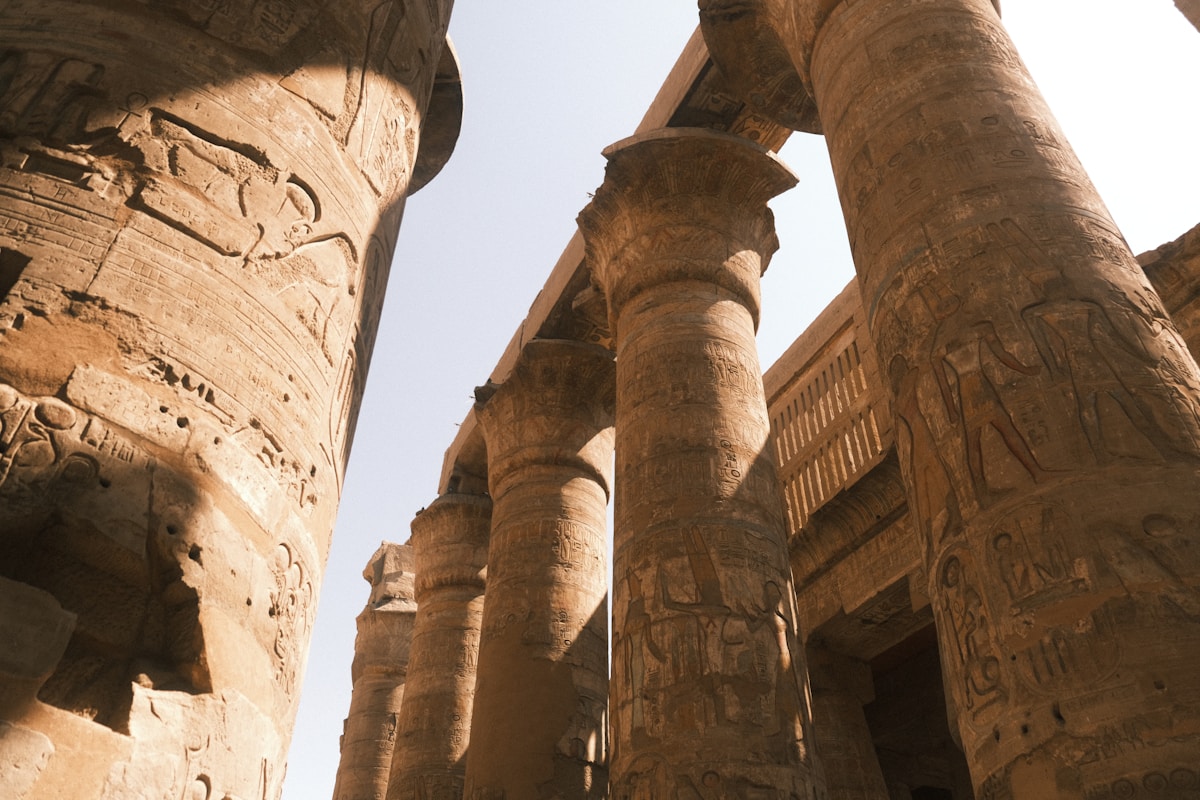
The first pylon stands 66 metres wide and is modelled on a migdol - a Syrian fortress-tower gateway - in a deliberate architectural reference to Ramesses III’s military campaigns in the Near East. The exterior surfaces of the pylon and the outer walls are covered in detailed carved reliefs documenting those campaigns.
The Sea Peoples
The most celebrated scenes at Medinet Habu are the reliefs on the north exterior wall depicting the Battle of the Delta, fought around 1178 BC. This was Ramesses III’s decisive military engagement against what Egyptian texts call the “Sea Peoples” - a coalition of migrating groups who attacked Egypt and destabilised much of the eastern Mediterranean in the 12th century BC.
The identity of the Sea Peoples remains debated. Egyptian reliefs identify different groups by name - the Peleset, Tjeker, Shekelesh, Denyen, and Weshesh among others - and scholars have proposed various correspondences with known Mediterranean populations. The reliefs at Medinet Habu are the most detailed surviving Egyptian record of this engagement. They show land and naval battle scenes, the capture of prisoners, and the aftermath of the Egyptian victory in considerable detail.
Ramesses III is generally considered the last pharaoh of the New Kingdom to exercise genuine political and military power. The period following his reign saw a steady fragmentation of royal authority.
The Painted Ceilings
The inner halls and sanctuary areas of Medinet Habu retain original painted colour on the ceiling in several sections. This is genuinely exceptional. Most ancient Egyptian painted surfaces have lost their colour over millennia of exposure - the paint is gone or reduced to faint traces. The survival of visible colour on the Medinet Habu ceilings is one of the strongest arguments for visiting the temple rather than spending the equivalent time at a second or third tomb in the Valley of the Kings.
The colours - astronomical and religious motifs on the ceiling vaults - remain clearly legible. The contrast with the stripped interiors of most other temples is stark.
The Palace Section
Uniquely among Egyptian mortuary temples, Medinet Habu contains a palace section attached to the south side of the first court. This is where Ramesses III would reside during religious festivals when his physical presence at the temple was required. The palace includes a “window of appearances” - the formal aperture through which the pharaoh would show himself to assembled officials and subjects - a design element found at several New Kingdom royal complexes.
The Harem Conspiracy
Ramesses III did not die quietly. The Judicial Papyrus of Turin documents a conspiracy among members of the royal harem to assassinate him and replace him with one of his minor sons. The plot was discovered and those involved were tried. Whether Ramesses III actually survived the assassination attempt or died of wounds sustained in it has been debated; examination of his mummy in the 20th century identified a throat wound consistent with a cutting implement.
The conspiracy was documented, tried, and punished. The decline of the New Kingdom that followed his death is difficult to separate from the political instability it represented.
Visiting Medinet Habu
Medinet Habu is on the West Bank circuit and is most easily reached by bicycle from the West Bank ferry landing (approximately 6km), by taxi, or as part of a West Bank tour. It has a separate entrance ticket from the Valley of the Kings and other West Bank sites. Allow a minimum of two hours; three is more comfortable if you want to read the battle reliefs in any detail.
Morning visits avoid the worst of the heat and the temple is significantly less crowded than the famous tombs, particularly mid-week. For a guided West Bank day tour that includes Medinet Habu alongside the Valley of the Kings, browse Luxor tours.
Frequently Asked Questions
- Is Medinet Habu included in the Valley of the Kings ticket?
- No - it has a separate entrance ticket. It is on the West Bank and is visited on the West Bank circuit, but each major site has its own ticket. Budget approximately half a day for Medinet Habu.
- Why is Medinet Habu often skipped?
- Most tour itineraries prioritise the Valley of the Kings and Hatshepsut's temple, leaving limited time for Medinet Habu. It is worth the detour - the painted colour surviving on the ceiling reliefs and the exterior military campaign scenes are exceptional, and it is far less photographically crowded than the famous tombs.
Ready to explore?
Browse hundreds of tours and activities. Book securely with free cancellation on most options.
Browse on GetYourGuide →Best price guaranteed: same price as booking direct. We earn a small commission at no extra cost to you.