Abu Simbel Travel Guide: Ramesses II's Temples on Lake Nasser
Plan your visit to Abu Simbel - the two temples, the 1960s relocation, the sun festival, and how to get there from Aswan.
Guides for Abu Simbel
Abu Simbel is a village on the western shore of Lake Nasser, 280km south of Aswan and close to the Sudanese border. The village exists because of two temples - both cut from sandstone cliffs by Ramesses II around 1264 BC, both relocated in their entirety in the 1960s to save them from rising water as the Aswan High Dam was built. The temples are a UNESCO World Heritage Site and among the most visited monuments in Egypt. The relocation project, in which the temples were cut into blocks and reassembled on higher ground, is one of the more remarkable feats of 20th-century archaeological engineering.
Getting There from Aswan
There are three ways to reach Abu Simbel from Aswan.
The road convoy departs Aswan at approximately 4am, travels 280km on the desert highway, and arrives around 7:30am. The return convoy leaves in the early afternoon. It is the cheapest option and requires an early start - the convoy system exists for security reasons on the desert road. The round trip is a long day.
The domestic flight from Aswan airport takes 45 minutes each way. Flights depart early morning and allow a comfortable few hours at the site before flying back. It is significantly more expensive than the road but removes most of the logistical difficulty. For a guided day trip combining transport and an Egyptologist guide, browse Abu Simbel tours from Aswan.
The Lake Nasser cruise is a two to four day journey by boat from Aswan, stopping at smaller temple sites along the lake before ending at Abu Simbel. It is the premium option and gives more context to the landscape.
The Great Temple
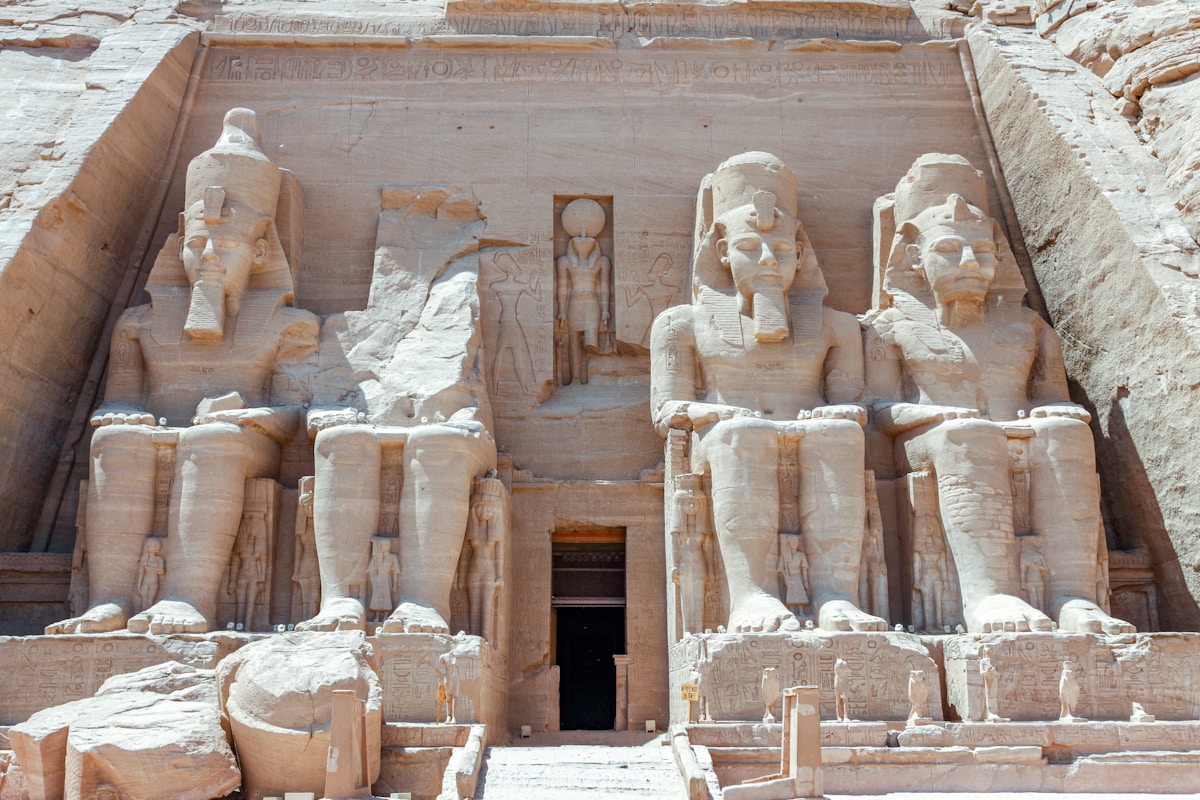
The Great Temple is the larger of the two - four colossal statues of Ramesses II seated on thrones flank the entrance facade, each approximately 20 metres tall. The interior runs 60 metres into the cliff, with painted reliefs depicting battle scenes from Ramesses’ campaigns, particularly the Battle of Kadesh. The innermost sanctuary holds statues of four deities including Ramesses himself. The interior is dimly lit; bring a torch or use the one on your phone.
The Small Temple
The Small Temple stands a short walk from the Great Temple and is dedicated to Ramesses’ principal wife, Nefertari, alongside the goddess Hathor. It is the only Egyptian temple where a queen’s statue appears at the same scale as the pharaoh’s on the exterior facade - a notable break from convention. The interior reliefs are well-preserved and the colour in some sections is still visible.
The Sun Festival
On 22 February and 22 October each year, the rising sun aligns with the temple axis and illuminates the innermost sanctuary, reaching three of the four divine statues. Ptah, god of the underworld, is positioned to remain in permanent shadow. The alignment dates are thought to correspond to significant dates in Ramesses’ reign - possibly his birthday and coronation. The sun festival draws large crowds; accommodation and flights book out weeks in advance. If this is your reason for visiting, plan accordingly.
The Relocation
Between 1964 and 1968, an international UNESCO-coordinated campaign dismantled both temples into approximately 2,000 individually numbered blocks and reassembled them 65 metres higher and 200 metres further from the river. The artificial hill constructed to surround the temples mimics the original cliff appearance. Standing inside and knowing the entire structure was moved is one of those facts that takes a moment to process.
Nearby
Aswan is the natural base for any Abu Simbel visit. For detailed history of the temples themselves, see our Abu Simbel temples guide.
Abu Simbel Guides
- Things to Do in Abu Simbel
- Getting to Abu Simbel
- Abu Simbel Temples: History and Visitor Guide
- Aswan Travel Guide - the most common base for Abu Simbel visits
- Aswan Itinerary - how to combine Aswan, Philae, and Abu Simbel
- 1 Week in Egypt Itinerary - Abu Simbel fits naturally into a Nile Valley circuit
- Egypt History Itinerary - the 12-day deep-dive that includes an Abu Simbel day
Upcoming Events in Abu Simbel
Abu Simbel Sun Festival (October)
abu simbel
Abu Simbel Sun Festival 2026, 22 October. Solar alignment illuminates Ramesses II's inner sanctuary at dawn. Book accommodation months ahead.
Book an experience
Top experiences in Abu Simbel
Explore the best tours and activities in Abu Simbel , with instant confirmation and free cancellation on most bookings.